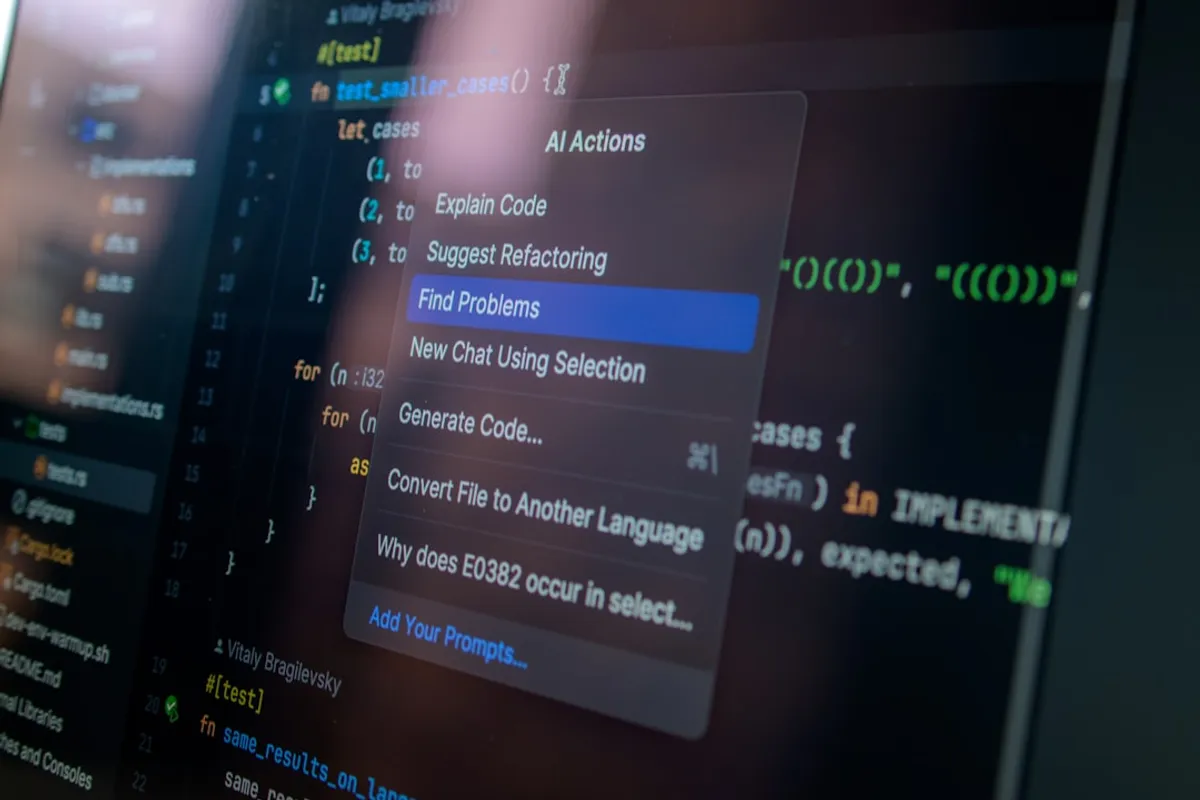
AI编程助手的革命:2026年开发者生产力的新纪元 | The AI Programming Assistant Revolution: A New Era of Developer Productivity in 2026
AI编程助手的革命:2026年开发者生产力的新纪元
2026年,软件开发行业正经历着一场前所未有的变革。从”敲代码”到”聊代码”,AI编程助手已经从实验性工具演变为开发者的核心生产力工具。根据最新的行业报告,预计到2026年底,90%的代码将由AI生成,开发者生产力提升高达55%。
从实验到生产:AI编程的成熟之路
回望2024年,AI编程助手还处于试验阶段,开发者们抱着试试看的态度探索这些新工具。然而,进入2026年,情况发生了根本性转变。腾讯的报告显示,超过90%的工程师正在借助AI编码,并基于自身实践推出专业工具如CodeBuddy(云代码助手)。
Claude Code的发布更是标志着AI编程能力的重大突破。据实测,开发者使用Claude Code仅需30分钟,就能将完整的CUDA后端代码成功移植到AMD的ROCm平台上——这在过去需要数天甚至数周的工作量。
主流工具的崛起
2026年的AI编程工具市场百花齐放:
- Claude Code:以强大的代码理解和生成能力著称,Opus 4.5版本已能以50%以上的成功率完成人类需要近5小时才能处理的软件任务
- GitHub Copilot:继续引领市场,深度集成到开发工作流中
- Qwen-Coder:阿里推出的开源代码模型,为中文开发者提供强大支持
- CodeBuddy:腾讯推出的企业级代码助手,专注于团队协作
”氛围编程”的兴起
“氛围编程”(Ambient Programming)入选《柯林斯词典》2025年度词汇,这个概念在2026年变得更加具体。开发者不再需要显式地编写每一行代码,而是通过与AI的对话来描述需求、架构和逻辑,AI自动生成高质量的代码实现。
这种编程范式的转变,让技术正从难以逾越的壁垒变为人人可调用的资源。正如上海漕河泾开发区AI校友中心的一位创业者所说:“AI时代,编程不再是少数人的专利,而是人人可以掌握的技能。“
开发者角色的转变
AI并不是要取代开发者,而是将他们从重复性的编码工作中解放出来,专注于更高价值的创新工作。根据行业观察:
- 架构设计:开发者将更多时间投入到系统架构和技术选型
- 业务理解:深入理解业务需求,转化为技术方案
- 代码审查:审查AI生成的代码,确保质量和安全
- 创新探索:尝试新技术、新框架,推动团队技术进步
挑战与机遇并存
尽管AI编程带来了巨大的生产力提升,但也面临着新的挑战:
安全与质量:公司需要将安全作为代码,通过自动化测试和运行时验证来降低AI生成代码的风险。将安全嵌入开发管道的组织,能够在安全创新的同时实现规模化。
技术债务:过度依赖AI可能导致代码缺乏深度理解,开发者需要保持对底层原理的掌握。
人才转型:传统编程能力的重要性下降,但对系统设计、问题分析和AI协作能力的要求提升。
2026年的趋势展望
-
AI代理的成熟应用:2025年是”玩一玩”和”原型开发”的一年,2026年将是AI代理投入生产的一年,我们将面临规模化部署时的挑战
-
多模态编程:AI不仅能理解代码,还能理解设计文档、需求文档,甚至直接从产品原型生成代码
-
个性化AI助手:每个开发者都将拥有定制化的AI编程助手,学习个人编码风格和项目特点
-
低门槛开发:AI工具使更多人能够执行专业化的编程工作,这一趋势将在2026年进一步放大
结语
AI编程助手的革命不是终点,而是新起点。2026年,我们正在见证软件开发范式的根本性转变。拥抱这一变革,持续学习和适应,将成为每个开发者的必修课。
未来已来,你准备好了吗?
The AI Programming Assistant Revolution: A New Era of Developer Productivity in 2026
In 2026, the software development industry is undergoing an unprecedented transformation. From “writing code” to “chatting about code,” AI programming assistants have evolved from experimental tools to core productivity tools for developers. According to the latest industry reports, 90% of code will be AI-generated by the end of 2026, with developer productivity increasing by up to 55%.
From Experiment to Production: The Maturation of AI Programming
Looking back to 2024, AI programming assistants were still in the experimental stage, with developers exploring these new tools tentatively. However, entering 2026, the situation has fundamentally changed. Tencent’s report shows that over 90% of engineers are now using AI-assisted coding, launching professional tools like CodeBuddy based on their own practices.
The release of Claude Code marks a significant breakthrough in AI programming capabilities. In tests, developers used Claude Code to port complete CUDA backend code to AMD’s ROCm platform in just 30 minutes—a task that previously took days or even weeks.
The Rise of Mainstream Tools
The AI programming tool market in 2026 is flourishing:
- Claude Code: Known for powerful code understanding and generation, Opus 4.5 can complete software tasks that take humans nearly 5 hours with over 50% success rate
- GitHub Copilot: Continues to lead the market, deeply integrated into development workflows
- Qwen-Coder: Alibaba’s open-source code model, providing strong support for Chinese developers
- CodeBuddy: Tencent’s enterprise-level code assistant, focused on team collaboration
The Rise of “Ambient Programming”
“Ambient Programming” was selected as Collins Dictionary’s 2025 Word of the Year, and this concept has become more concrete in 2026. Developers no longer need to explicitly write every line of code. Instead, they describe requirements, architecture, and logic through conversation with AI, which automatically generates high-quality code implementations.
This paradigm shift in programming is making technology a resource that everyone can access, not an insurmountable barrier. As one entrepreneur at the Shanghai Caohejing AI Alumni Center said: “In the AI era, programming is no longer the privilege of a few, but a skill everyone can master.”
The Transformation of Developer Roles
AI is not replacing developers but freeing them from repetitive coding work to focus on higher-value innovation. According to industry observations:
- Architecture Design: Developers will spend more time on system architecture and technology selection
- Business Understanding: Deeply understand business requirements and translate them into technical solutions
- Code Review: Review AI-generated code to ensure quality and security
- Innovation Exploration: Try new technologies and frameworks, drive team technical progress
Challenges and Opportunities Coexist
Despite the tremendous productivity gains from AI programming, new challenges emerge:
Security and Quality: Companies need to embed security as code, reducing risks of AI-generated code through automated testing and runtime verification. Organizations that embed security across their development pipelines can enable innovation to scale safely.
Technical Debt: Over-reliance on AI may lead to a lack of deep code understanding. Developers need to maintain mastery of underlying principles.
Talent Transformation: The importance of traditional programming skills declines, while requirements for system design, problem analysis, and AI collaboration skills increase.
2026 Trend Outlook
-
Mature AI Agent Applications: 2025 was the year of “let’s play with it” and prototyping. 2026 will be the year AI agents go into production, and we’ll face the challenges of scaling deployment
-
Multimodal Programming: AI can understand not just code, but also design documents, requirement documents, and even generate code directly from product prototypes
-
Personalized AI Assistants: Every developer will have customized AI programming assistants that learn personal coding styles and project characteristics
-
Low-Barrier Development: AI tools enable more people to execute specialized programming work, a trend that will further amplify in 2026
Conclusion
The revolution of AI programming assistants is not the end, but a new beginning. In 2026, we are witnessing a fundamental paradigm shift in software development. Embracing this change and continuously learning and adapting will be essential for every developer.
The future is here. Are you ready?